

Diabetes Care in Point Cook
Diabetes care in Point Cook works best as a steady routine: regular checks, results you understand, and a GP who looks beyond blood glucose to your eyes, feet, kidneys and heart. Point Cook Doctors sees people who have just been diagnosed, people who have managed type 1 or type 2 diabetes for years, and people told they are at risk.
You can meet our GPs before you book, and you can also keep seeing the GP you already know.
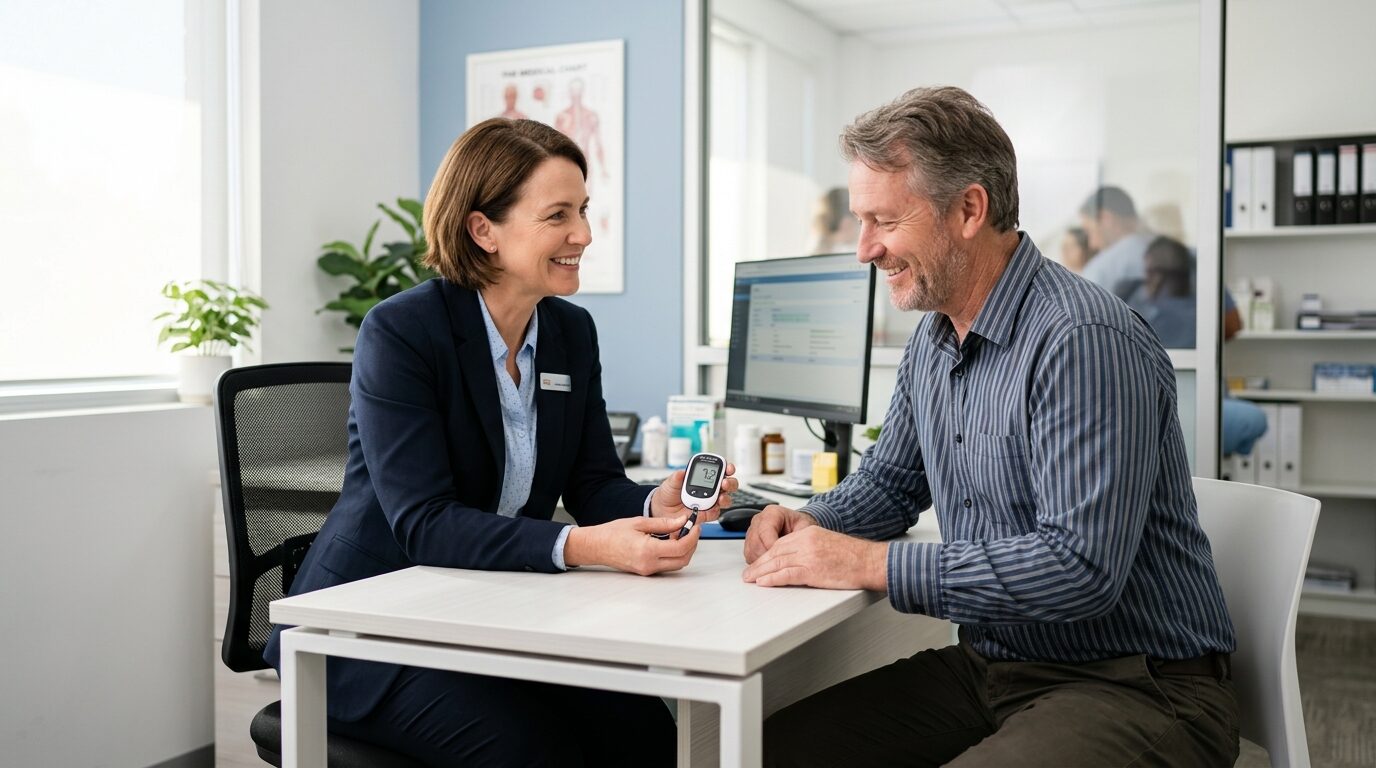
Checking your risk
According to Healthdirect, many people with type 2 diabetes have no symptoms at first. Others notice:
- being very thirsty or passing urine more often
- tiredness or hunger
- blurred vision
- frequent infections or wounds that heal slowly
Your GP should check your risk every three years from age 40, and every year from 18 for Aboriginal and Torres Strait Islander people. A blood test such as HbA1c confirms the diagnosis, and it can be collected at the clinic’s onsite pathology centre.
Your yearly cycle of checks
Diabetes Australia sets out the checks that help find complications early:
- HbA1c one to four times a year
- blood pressure at every doctor visit
- cholesterol every 12 months
- kidney health at least once a year
- eyes every one to two years with an optometrist
- feet checked by you daily and by a podiatrist at least yearly
- a dental check each year
People with diabetes can also have a Heart Health Check from age 35 if they do not already have heart disease.
Working with a diabetes GP in Point Cook
Your GP reviews results and medicines, talks through food, activity and weight, and coordinates the rest of your team. A GP chronic condition plan, part of our chronic disease management care, can give Medicare rebates for visits to a diabetes educator, a dietitian or a podiatrist. People with type 2 diabetes may also be eligible for group sessions. If specialist input is needed, your GP can refer you to an endocrinologist.
NDSS registration
Registering with the National Diabetes Services Scheme (NDSS) is free and gives lifelong access to subsidised diabetes products, a helpline and education. Your GP can complete the registration for you. It covers type 1, type 2 and gestational diabetes, but not pre-diabetes.
Preparing for a diabetes review
- your glucose meter, or the app linked to your sensor
- a list of your medicines and any recent changes
- questions about readings that worry you
- your insulin pens or pump details, if you use them
- shoes and socks that come off easily for a foot check
If your GP has ordered blood tests, have them done a few days before so the results are ready.
When to get urgent help
If someone with diabetes becomes confused, very drowsy or unconscious, or is vomiting and cannot keep fluids down, call 000. For a non-urgent problem after hours, call 13 SICK (13 7425).
Common questions
Do I need to fast for every blood test?
No. An HbA1c test does not need fasting. Some glucose and cholesterol tests do, and your GP will tell you when that applies.
I had gestational diabetes. Should I be checked again?
Yes. Gestational diabetes raises the chance of type 2 diabetes later, so ask your GP how often to test.
Should my family be checked too?
A family history of diabetes is a known risk factor, so it is worth parents, brothers and sisters asking their own GP about a risk check.
Can a diabetes review happen by phone?
Some follow-up can happen through our telehealth consultations, but foot, blood pressure and weight checks need a visit. Medicare has rules on who can have a phone consultation, so ask reception when you book.
How do I book?
You can book online or call (03) 7300 7780.
Other services
-
Asthma & COPD Care
Regular reviews to keep breathing under control for children and adults with asthma or COPD.
-
Blood Pressure & Heart Disease
Confirms whether a reading is truly high and manages it alongside cholesterol and diabetes.
-
Iron Infusions
Iron delivered through a drip when blood tests confirm a deficiency, faster than tablets.
Good to know
Before your appointment
If you are a new patient, please arrive at least five minutes before your consultation and bring:
- Photo ID
- A valid Medicare card