

PRP Hair Restoration
Platelet-rich plasma (PRP) hair restoration is a treatment made from a small sample of your blood. Platelets contain growth factors that may support follicle health and hair density.
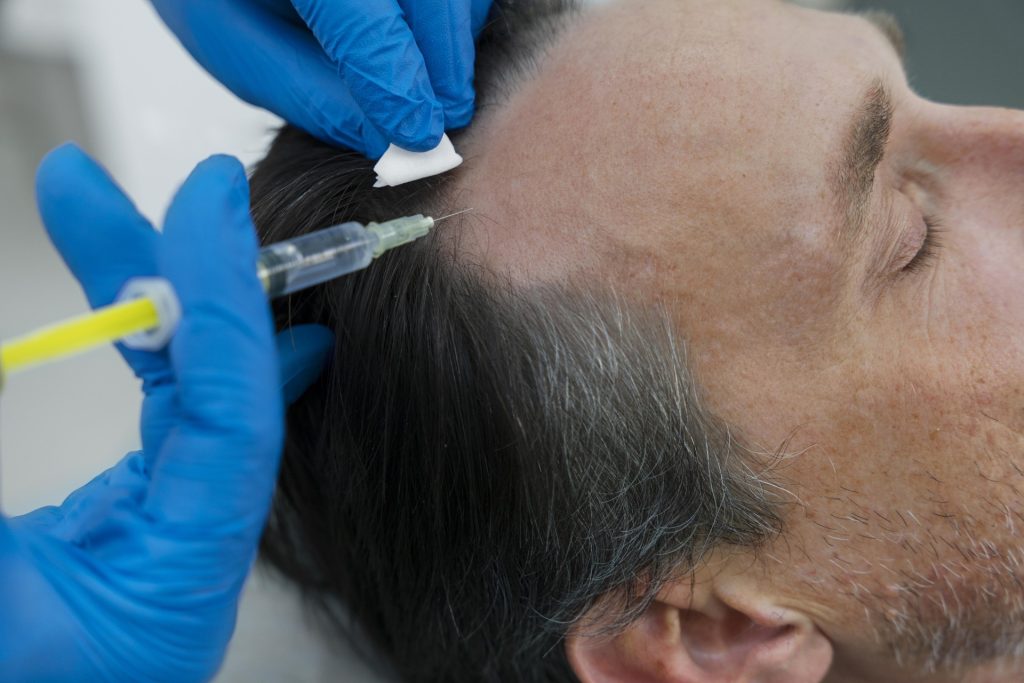
What PRP hair restoration is
Platelet-rich plasma is the part of blood plasma that holds a higher concentration of platelets than normal blood. For hair, it is applied to areas of the scalp where the hair has thinned. Because it is prepared from the patient’s own sample, no donor product or synthetic filler is involved.
Why patients ask about it
Patients raise PRP for a range of reasons, such as:
- gradual thinning at the crown or along the part line
- a hairline that has receded over several years
- wanting to compare it with other hair loss treatments before choosing
Thinning hair has many possible causes, including genetics, hormonal changes, low iron, thyroid conditions, certain medicines and scalp conditions. Some of these are best managed by treating the cause itself, which is why a medical assessment comes first.
From blood sample to treatment
Treatment happens in three stages:
- blood is drawn from the arm, in the same way as for a standard blood test
- the blood is spun down so the platelet-rich layer can be separated out
- the doctor then applies this layer to the thinning areas of the scalp
Mild tenderness or redness of the scalp can occur afterwards.
Your consultation
Nothing is booked until you have seen a GP. The first appointment covers:
- your health background and how the hair loss has progressed
- each step of the treatment
- side effects and risks to be aware of
- whether PRP fits your situation, and which other options exist
- your own questions
You are free to decide against treatment once the appointment is over.
Preparing for the consultation
It helps to think about the following before your appointment:
- when you first noticed thinning and whether it has changed
- any family history of hair loss
- medicines, supplements and hair treatments you use
- recent illness, surgery, weight change or major stress
Photos of your hair taken over time can also show how it has changed.
What PRP can and cannot do
Only a doctor can judge whether PRP is right for a particular person, and for some people it is not. Results differ from one patient to the next and no one can promise a specific outcome, so go in with realistic expectations and weigh up the alternatives too.
When hair loss needs a different kind of check
Sudden or patchy hair loss, shedding alongside tiredness or weight change, or a sore, red or scaly scalp can point to a medical cause that needs its own assessment. Mention any of these at your appointment, and book sooner if they are new.
Common questions
Is PRP covered by Medicare?
Generally no, so you will pay the full cost. You will know what that cost is before any treatment is booked.
How many sessions are involved?
This varies from person to person. It is a good question to ask at your consultation, where the doctor can explain what would be suggested in your situation.
Can PRP be combined with other hair loss treatments?
Bring a list of any treatments, medicines or supplements you already use. The doctor can then talk through how PRP might fit alongside them, or whether another option makes more sense.
Is PRP used for anything other than hair?
Yes. Our PRP Clinic page covers PRP more broadly, including skin and joints.
Who may not be suitable for PRP?
People with some blood or platelet disorders, an active scalp infection or certain other medical conditions may not be suitable, and medicines such as blood thinners need to be discussed first.
Can women ask about PRP for hair?
Yes. Hair thinning affects women as well as men, and the same assessment applies, including checks for causes such as iron deficiency or hormonal changes.
Good to know
Before your appointment
If you are a new patient, please arrive at least five minutes before your consultation and bring:
- Photo ID
- A valid Medicare card
Fees and billing
We offer bulk billing to all patients with a valid Medicare card for standard consultations. All procedures are subject to fees.